
AI Strategy
Anthropic launches Claude Tag: Slack bot or gatekeeper of your operating layer?
Claude Tag brings AI to the place where teams already work. Useful, until the same agent also manages your tools, memory, and workflows. Then you are no longer just renting a model. You are renting the gatekeeper of your company.

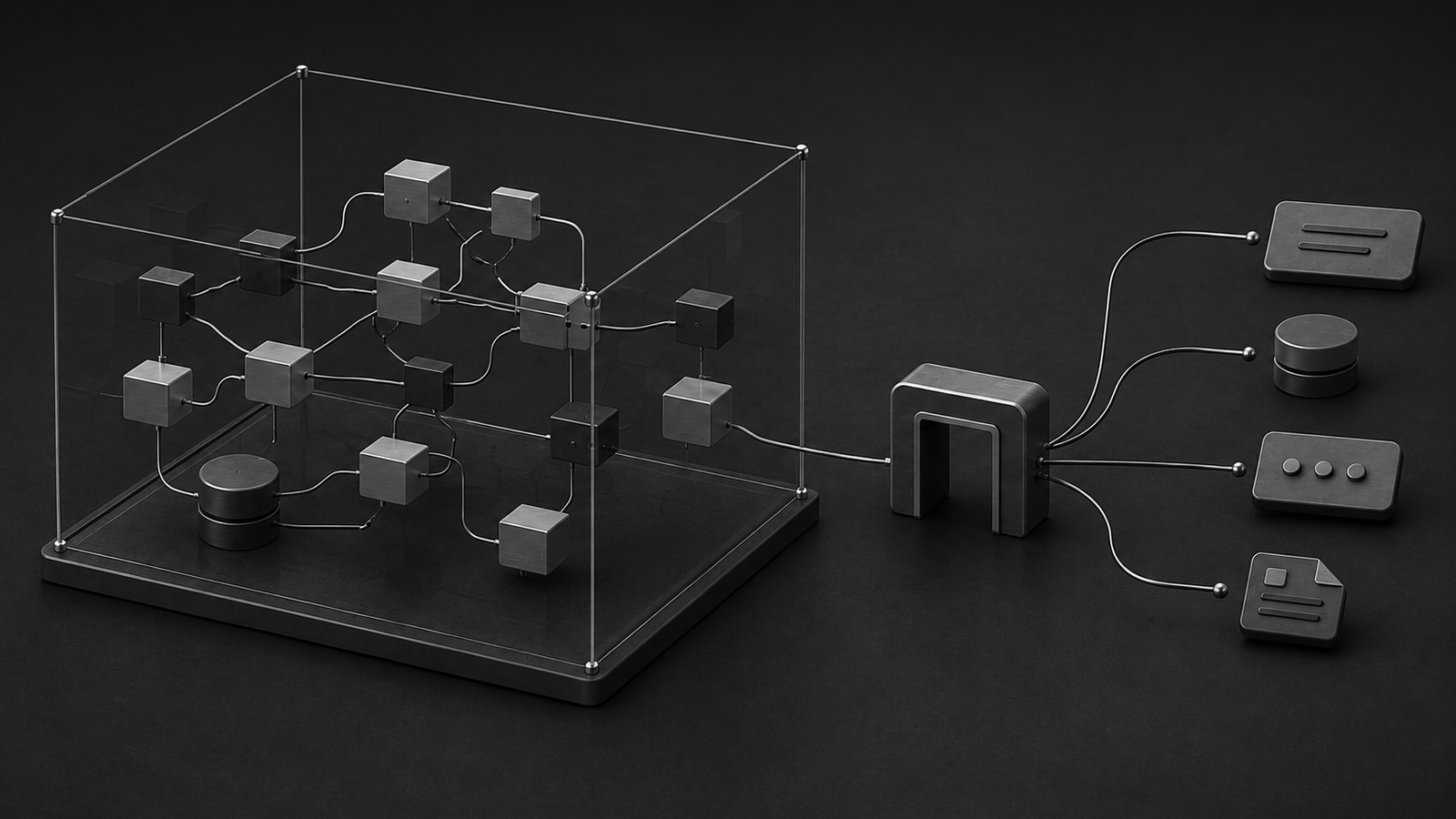
Anthropic just introduced Claude Tag: Claude inside Slack, where people can tag @Claude in a channel or thread and hand off work.
That sounds small if you only read it as another chat integration. It is not small.
Claude Tag is Anthropic moving Claude from a tool you talk to into a worker that participates in the places where teams already coordinate. It can pick up a task from a thread, create a working session, use approved tools and connections, post progress, and return an output in the same conversation.
That is the same basic pattern many of us have been building outside the big model platforms: agents connected to chat, tools, files, memory, schedules, code, notes, and background jobs. The model is only one part of it. The real product is the operating layer around it.
Claude Tag looks useful. I would probably use it in the right environment. Anthropic is good at this, and this is a rational product move.
The question is what you let it become.
What Claude Tag is
Claude Tag puts Claude into Slack. A teammate mentions @Claude in a channel or thread, describes a task, and Claude starts working in that context.
Anthropic describes it as a public beta for Claude Enterprise and Team customers, starting with Slack. It replaces the earlier Claude in Slack app and is positioned as part of the broader move from individual chat to team-wide agentic work.
The important detail is that Claude Tag is not just answering a question in Slack. It creates a per-thread working session in an Anthropic-hosted sandbox. From there it can work with the tools, data connections, and network access that admins have allowed. It posts checklists, progress updates, and final results back into the Slack thread.
So the team does not have to move work into Claude. Claude moves into the team's coordination surface.
That is a big deal. Most companies do not want another blank chat box. They want useful work to happen where the work is already happening.
How it works
The design is sensible.
In a channel, Claude Tag runs through admin-provisioned service accounts and access bundles. Access follows the channel rather than the individual person who happened to tag Claude. That matters because channel work usually belongs to a team, project, function, or business process.
In direct messages, the model is different. Anthropic says DMs run under the user's own claude.ai account and personal connectors.
The sandbox has controlled outbound access. Calls go through Anthropic's Agent Proxy. By default, egress is denied unless a host or connection is allowed. Credentials are injected at the proxy boundary rather than being placed directly inside the sandbox.
Admins get controls around channel scoping, tool and data connections, spend limits, logs, audit visibility, and network allowlists. Channel memory and transcripts can be retained, with different scoping for public and private channels.
That is exactly the kind of plumbing you need if agents are going to do real work in a company. Identity. Access. Memory. Tool permissions. Sandboxing. Audit trails. Budget controls. Network policy.
This is where the feature becomes strategically interesting.
The agent is no longer just the model
A few years ago, the practical question was mostly: which model is best?
Now the question is wider:
- Where does the agent live?
- Which channels can it hear and respond in?
- Which tools can it call?
- Where does its memory live?
- Who owns the transcripts and working context?
- Who controls schedules, background jobs, and long-running tasks?
- Can you swap the model without rebuilding the workflow?
- Can you move the workflow if the vendor changes terms, access, price, policy, or jurisdiction?
That is the real shift.
If your agent only writes a better email, model choice is the main decision. If your agent becomes part of how the company thinks, documents, routes work, checks systems, prepares meetings, drafts proposals, updates notes, watches channels, and performs follow-up, then the agent infrastructure becomes business infrastructure.
And business infrastructure has a different risk profile than software you casually try for a month.
This is the same pattern self-hosted agents have been exploring
I have been using Clark, my own agent setup, through systems like OpenClaw. The exact implementation is not the point. The pattern is.
I can send a message from Telegram, Mattermost, or another surface and ask for something concrete: research a topic, draft a note, prepare for a meeting, inspect a repo, summarize a thread, update an Obsidian note, create a reminder, or keep track of a longer-running task.
The useful part is not that Clark can chat. Chat is just the doorway.
The useful part is that work can persist in my own files, notes, schedules, scripts, and local infrastructure. The agent can use different tools for different jobs. It can route through different model providers depending on the task. It can run close to the systems I already use instead of trapping all context inside one vendor's product.
OpenClaw is one example of this direction: a self-hosted gateway for agents across messaging surfaces, with tool use, sessions, memory, background tasks, cron-style jobs, hooks, multi-agent routing, and support for many model providers.
Hermes is another example. It describes itself as an open-source, self-hostable agent that can run from the terminal, messaging platforms, and IDE workflows, with persistent memory, reusable skills, tools, browser automation, code execution, cron jobs, and multi-agent delegation. Its self-hosting page makes the control argument explicit: control over memory, models, infrastructure, privacy, and platform lock-in.
Anthropic's Claude Tag is a polished, enterprise-friendly version of a pattern that already exists in the self-hosted and power-user world.
That should not offend anyone. It is what good product companies do. They watch where advanced users are doing awkward, high-value work, then they make a cleaner managed version.
The managed version will be easier for many teams. It will have better defaults, cleaner admin controls, vendor support, and less operational mess.
The tradeoff is ownership.
The platform move
When a model company gives you the agent, the chat surface, the sandbox, the memory layer, the tool wiring, the service accounts, the audit trail, the permissions model, and the admin dashboard, you are no longer just buying inference.
You are adopting an operating layer.
That layer can become sticky very quickly. Not because anyone is being evil. Because useful infrastructure accumulates dependency.
The first use case is simple: summarize this thread.
Then it becomes: check the CRM and draft the follow-up.
Then: prepare the weekly review from these systems.
Then: monitor this channel and create tasks.
Then: remember how this team likes things done.
Then: every department has channel-level agents with different access bundles, memories, logs, permissions, prompts, and recurring workflows.
At that point, moving away is no longer a model migration. It is an organizational migration.
The hard part is not changing claude-foo to gpt-bar in an API call. The hard part is extracting the workflow graph, access model, memory, scheduling logic, audit assumptions, user habits, and team-specific context that grew around the vendor's platform.
That is where lock-in becomes real.
The Google lesson
We have seen this pattern before with major platforms.
Google Search was incredibly useful. Google Ads was useful. Google Workspace, Google Maps, Gmail, Chrome, Android, YouTube, and the broader Google ecosystem solved real problems for real businesses.
The dependency problem did not appear on day one. It appeared after companies built traffic, operations, advertising, documents, analytics, customer acquisition, and internal workflows around one platform's rules.
Then changes in ranking, pricing, API access, enforcement, product bundling, or account policy could materially affect a business.
The point is not that Google is bad and therefore AI vendors are bad. That is too easy and not very helpful.
The useful lesson is simpler: convenient central platforms become load-bearing. Once they become load-bearing, the power balance changes.
AI agents are heading for the same place, only faster, because they touch both knowledge work and execution. They do not just store documents or route ads. They can act across systems.
That makes infrastructure ownership more important, not less.
The Fable/Mythos warning
Anthropic's Fable/Mythos access incident is a clean dependency warning.
A few days ago the US government issued an export control directive suspending access to Fable 5 and Mythos 5 for foreign nationals, including foreign-national Anthropic employees. Anthropic disabled those models for all customers while it worked through compliance.
This does not require a conspiracy theory. It does not even require blaming Anthropic. Their public statement says they were complying with a government directive.
That is exactly why it is a useful example.
A customer can do nothing wrong. A vendor can disagree with the restriction. The product can still become unavailable because legal and political constraints changed around it.
If the restricted thing is one optional model, you route around it.
If the restricted thing is embedded in your agent operating layer, routing around it becomes much harder.
This is especially relevant for companies outside the United States, companies with mixed-nationality teams, regulated industries, public-sector work, and any organization that needs to explain where data, memory, access, and execution actually live.
Jurisdiction is part of architecture.
Use Claude Tag, but know what layer you are giving away
I do not think the answer is: never use Claude Tag.
That would be lazy advice.
Claude Tag will probably be a good fit for many teams, especially if they are already deep in Slack and Claude Enterprise. It gives admins real controls. It brings agents into the collaboration surface. It reduces the friction between asking for work and getting work done.
The better question is: what should live there?
Some work is fine inside a vendor-managed agent layer:
- short-lived research
- thread summaries
- drafting assistance
- low-risk coordination
- bounded internal automations
- team experiments where speed matters more than portability
Other work deserves more caution:
- long-lived operational memory
- recurring workflows that become part of how the company runs
- cross-system automation with broad permissions
- sensitive client or regulated data
- internal knowledge that would be painful to extract
- workflows where model/provider independence matters
- tasks that need to survive vendor policy, pricing, availability, or jurisdiction changes
This is not about purity. It is about knowing which parts of the stack you can afford to rent.
Own the boring parts
The boring parts are the important parts.
Where does memory live?
Where do task histories live?
Where are prompts, skills, and procedures stored?
Can you inspect and version them?
Can you run the agent from more than one channel?
Can you change models without changing the way the team works?
Can you move from one provider to another without losing the agent's working context?
Can you keep using the system if a vendor has an outage, changes terms, removes a model, changes prices, or blocks a capability?
Can you explain to a client, auditor, or internal security person where the data went and who could access it?
These questions are boring until they become urgent.
Self-hosted agent infrastructure is not automatically better. It has costs. You have to run it, secure it, maintain it, and make decisions that a managed platform would make for you. Most teams underestimate that work.
Managed platforms are not automatically a trap. They often give you better security defaults than a chaotic internal experiment.
The mistake is adopting the managed platform without noticing that it is becoming the place where your organization remembers, coordinates, and acts.
My bias
My bias is to keep the agent layer close to the owner of the work.
Use the best models. Use Anthropic, OpenAI, Z.AI, Google, xAI, Mistral, local models, or whatever makes sense for the task. Swap when the quality, price, speed, privacy, or availability changes.
But do not casually hand one vendor the whole execution layer.
The model should be replaceable.
The memory should be yours.
The workflows should be portable enough that you are not negotiating with your own dependency later.
Claude Tag is a sign of where the market is going. The big AI companies are no longer trying to win only at the model layer. They want to own the place where work gets delegated, remembered, executed, audited, and returned.
That is valuable. That is also exactly why it matters.
If agents are going to become part of how companies operate, the strategic question is not only which assistant is smartest this month.
It is who owns the infrastructure the assistant lives in.
Sources / notes
- Anthropic, “Introducing Claude Tag”: https://www.anthropic.com/news/introducing-claude-tag
- Claude Tag documentation: https://claude.com/docs/claude-tag/overview
- Claude Tag, “How it works”: https://claude.com/docs/claude-tag/concepts/how-it-works
- Claude Tag, “Agent identity”: https://claude.com/docs/claude-tag/concepts/agent-identity
- Claude Tag, “Security and data”: https://claude.com/docs/claude-tag/concepts/security-and-data
- Anthropic statement on Fable/Mythos access: https://www.anthropic.com/news/fable-mythos-access
- Hermes Agent: https://hermes-agent.ai/
- Hermes self-hosting: https://hermes-agent.ai/self-hosting